Two Hundred Covers, One Kitchen: The Quiet Craft of Large Wedding Catering
Photo: Steve Shook from Moscow, Idaho, USA, CC BY 2.0, via Wikimedia Commons
There is a moment in every large wedding service when the kitchen holds its breath. Two hundred plates, one pass, a marquee in the middle of a field in Gloucestershire and a couple who want their guests to feel as though dinner was made just for them. That moment is not won by luck. It is won weeks earlier, in the planning, the batching and the quiet arithmetic of feeding a small village in a single sitting.
Scale Is a Design Problem, Not a Cooking Problem
The most common mistake couples make when planning a large wedding breakfast is assuming the menu simply doubles, triples, quadruples. In practice, a dish that sings for twenty can fall apart at two hundred. A delicate pan sauce becomes a logistical nightmare when portioned two hundred times in the final ten minutes. A risotto that relies on last-moment finishing will never survive the journey from a remote kitchen to the far end of a marquee.
The answer is not to lower ambitions but to choose dishes engineered for volume. Braises, roasted joints, en croûte preparations, well-chilled desserts and composed salads all scale gracefully because much of their work can be done in advance. The best large-wedding menus are built around a spine of dishes that hold beautifully, then finished with elements added à la minute — a warmed dressing, a scattering of herbs, a spoonful of something bright.
The Batch Mindset
Professional caterers think in batches long before the first guest sits down. Batching is not about cooking in enormous, flavourless vats; it is about breaking two hundred covers into manageable, repeatable units that can each be cooked, chilled, transported and finished to the same standard.
A well-run kitchen will work in consistent increments — perhaps twenty-five or fifty portions at a time — so that every batch receives the same attention, the same seasoning and the same resting time. Sauces are made in volume but reduced and adjusted in smaller quantities. Proteins are portioned uniformly before service so that the 187th plate looks identical to the first. Nothing is left to improvisation at the pass.
This discipline is invisible to guests, and that is precisely the point. The wow factor at a large wedding rarely comes from complexity; it comes from consistency — every plate arriving hot, every portion generous, every element seasoned exactly as the last.
Service Logistics: The Part Nobody Photographs
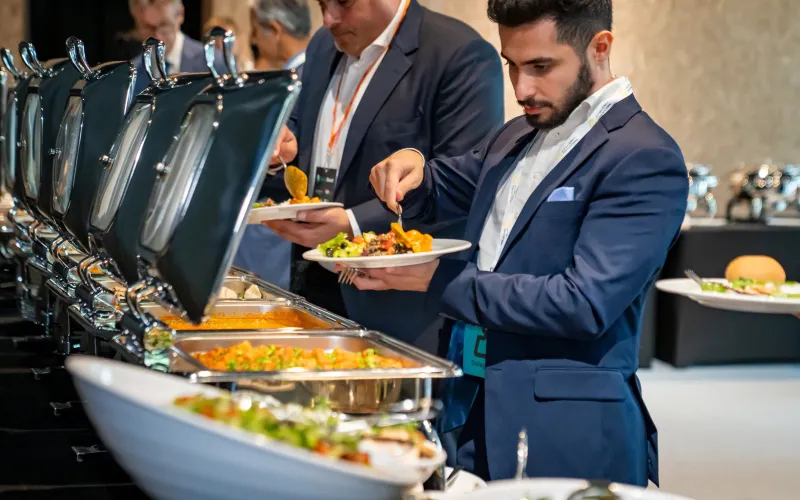
Food quality at scale is inseparable from service logistics. A plated wedding breakfast for 200 requires a synchronised front-of-house team, a clear hot-pass hierarchy, and a realistic assessment of the distance between kitchen and table.
Consider the practicalities. If the kitchen is a twenty-metre walk from the marquee, plates need to be staged, covered and released in a rhythm that ensures the first table and the last are served within minutes of each other. Hot cupboards and heated trolleys are not shortcuts; they are the difference between a warm plate and a lukewarm apology. Equally, dietary requirements — and at 200 guests there will be many — must be flagged, plated and routed without disturbing the flow of service.
Experienced wedding planners often describe the best caterers as conductors rather than cooks. The kitchen may be out of sight, but its timing is felt at every table.
Menus That Flatter a Big Room
Certain dishes simply read better in a large room. A carved joint of British beef or a whole roasted rack of lamb carries theatre and aroma across a marquee in a way that a subtle fish course cannot. Sharing platters, family-style service and generous grazing elements can also soften the institutional feel that sometimes creeps into large weddings.
Seasonality helps enormously. A menu built around the British growing season — spring lamb, summer berries, autumn game, winter roots — delivers flavour at its peak and cost efficiency at scale, since ingredients in season are both better and more plentiful.
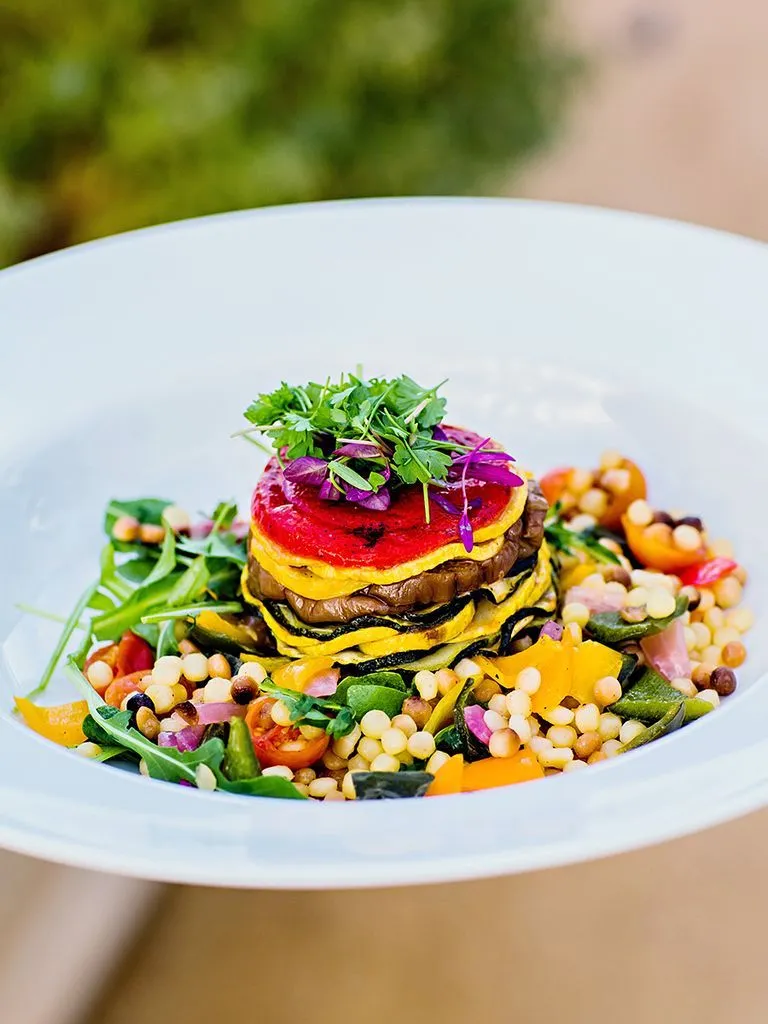
Desserts deserve particular thought. A plated dessert for 200 must be assembled with military precision, which is why many caterers steer couples towards options that can be largely prepared in advance: potted creams, tarts finished with fruit at the last moment, or a showstopping cake served with a simple, excellent accompaniment.
Keeping It Personal
The final ingredient is narrative. Guests at a large wedding remember the food that tells a story — the couple's favourite pudding from a first date, a nod to a family recipe, produce from a farm down the road. These touches cost little but transform two hundred identical plates into two hundred small acts of hospitality.
That is the quiet craft of large wedding catering: rigorous behind the scenes, effortless in front of the room. When it is done well, nobody notices the machinery at all. They simply remember a wonderful meal, shared with people they love, at a table that felt made for them — all 200 settings of it.