Four O'Clock in the Morning: What Really Happens Before Your Guests Arrive
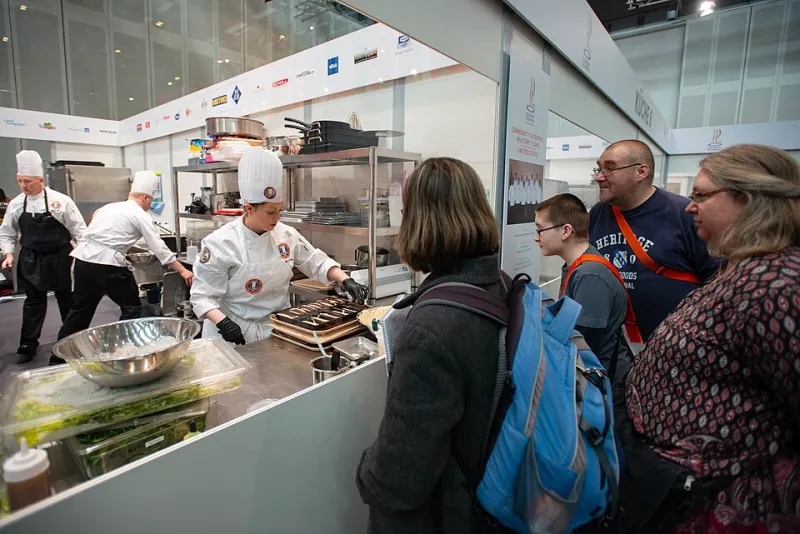
Photo: U.S. Army USAG-S by Paul Hughes, Public domain, via Wikimedia Commons
The wedding breakfast is scheduled for 2pm. The marquee doors open to guests at half past one, and the room looks effortless: linen pressed, glassware glinting, place settings precise to the millimetre. What the 500 people seated at those tables will never witness is the fourteen hours of choreography that made the effortlessness possible. We thought it was worth documenting.
04:00 — The Kitchen Wakes
The day begins in our production kitchen while most of the county is still asleep. By four o'clock, the head chef has the delivery checklists out and the first of the day's prep stations running. Beef for the slow-braised main course goes into the ovens first — at this scale, braises need a full eight hours to reach the texture we're after, so timing starts here or not at all.
Vegetables are prepped in batches that would stock a small shop: forty kilos of potatoes peeled and parboiled, trays of seasonal greens trimmed, hundreds of canapé components assembled by hand. There's a rhythm to it, and a surprising amount of quiet. Early kitchen work is repetitive and meditative, and the team saves conversation for the pressures later in the day.
07:30 — The Load-In
By half seven, the vans are loaded in reverse order of need — the last items in are the first items out. This sounds trivial; it is not. A poorly packed van can add forty minutes to a setup, and at a wedding, forty minutes is the difference between a calm room and a frantic one.
At the venue, a country estate where the marquee went up two days earlier, the team meets the on-site coordinator for a walk-through: service entrances, power supply, water access, waste plan. In a field with no kitchen, everything runs off the mobile units — ovens, refrigeration, hot water. The engineering is invisible when it works, which is precisely the point.
10:00 — Building the Room
Tables are dressed, centrepieces positioned to the couple's specification, and place settings laid for 500. The front-of-house manager briefs the service team of twenty-two — many of them casual staff who've worked with us for years — running through the running order, the dietary requirements list, and the table plan. Every server knows which tables include guests with allergies before they pick up a single plate.
13:00 — The Final Push
Hot canapés come out of the mobile ovens as the first guests drift in from the ceremony. Timing is everything: food must be fresh, hot and plentiful from the very first minute, because the first twenty minutes set the tone for the whole day. Meanwhile, the kitchen fires the mains in staggered batches so that 500 plates leave the pass at the right temperature, in the right order, matched to the speeches schedule.
17:00 — The Turnaround and the Evening
After the wedding breakfast, the room resets for the evening do. Chairs are cleared, a buffet and evening food station is built, and the service team shifts from formal plated service to something looser and faster. The kitchen, meanwhile, begins the first wave of pack-down — washing, sorting and crating — while the party is in full swing.
23:30 — The Last Crate
By eleven thirty, the dance floor is doing its job and the kitchen is a clean, quiet, box-filled room. Everything that arrived that morning leaves that night. The venue is returned exactly as we found it, and the crew — fed, tired, and quietly pleased — heads home.
Why We're Telling You This
Because when you're choosing a caterer for a wedding of any size, the food on the tasting day is only half the story. The other half is logistics: the planning, the staffing ratios, the contingency thinking, the discipline of a team that starts at four in the morning so that, at two in the afternoon, everything looks like it simply appeared.
Good catering is invisible. We'd just like you to know what invisibility costs — and why it's worth every minute.