Pour Decisions: Building a Drinks Programme That Flatters the Menu and Respects the Budget
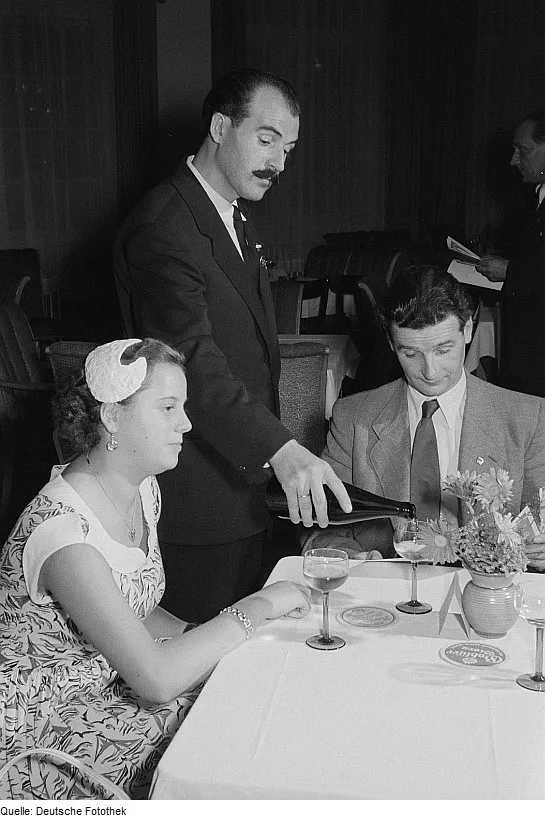
Photo: Roger Rössing / Renate Rössing, CC BY-SA 3.0 de, via Wikimedia Commons
Ask most event planners where their budget wobbles and the answer is rarely the canapés or the main course. It is the bar. Drinks are the most emotionally charged, least systematically planned element of corporate hospitality — and the line item most likely to balloon.
At MN Catering, we treat beverages as part of the menu architecture, not an afterthought bolted on at the end. Here is how we approach it, and how you can too.
Start With the Menu, Not the Cellar
The single biggest mistake we see is choosing drinks in isolation. A bold winter menu built on slow-braised lamb and root vegetables pairs beautifully with a £9-a-bottle Spanish garnacha — but clashes with the delicate sauvignon blanc someone insisted upon because it was on offer.
Work backwards: what is on the plate? Our autumn and winter menus, heavy on British game and seasonal root vegetables, welcome medium-bodied reds and aromatic whites. Summer events built around lighter British produce call for crisper pours. When the drinks list is designed alongside the food, you need fewer options, not more — which is where the savings begin.
Know Your Licensing Ground
Before a single bottle is ordered, confirm who is legally allowed to serve what. In England and Wales, events generally require a premises licence or a Temporary Event Notice (TEN) from the local authority. A TEN covers events of up to 499 people and costs £21, with a cap of around 15 per year per venue. Many venues hold licences already, but some of the most characterful spaces — marquees, galleries, unlived-in buildings — do not.
If you are bringing in an external caterer or bar operator, ask to see their licensing arrangements in writing. It is an unglamorous question that prevents a very glamorous problem.
The Corkage Conversation
If your venue holds a licence, you may be tempted to buy retail and bring your own. Enter the corkage fee: typically £10–£25 per bottle, sometimes more at prestigious venues. Do the arithmetic honestly. A £12 bottle from a supermarket plus £20 corkage is a £32 bottle — often more than the venue's own wine list after negotiated trade discount.
Corkage makes sense in specific scenarios: a meaningful anniversary bottle, a direct relationship with a vineyard, or a genuinely better wine at a price the venue cannot match. Otherwise, negotiate the venue's list instead. Most will move on price at 100+ covers, particularly if you commit to a drinks package upfront.
A Worked Example: 100 Guests, Corporate Evening Reception
Here is a realistic costed breakdown for a four-hour evening event with 100 guests, based on typical UK pricing:
- Welcome drink: Prosecco or English sparkling alternative — 60 glasses from 10 bottles — £110
- Wine with canapés and bowl food: 3 glasses per head average — 300 glasses, roughly 40 bottles across a white and a red — £420
- Beer and cider: 60% of guests drinking 2 units — approximately 120 pints from kegs or bottles — £340
- Soft drinks, low- and no-alcohol options: juices, sparkling water, alcohol-free beer and wine — £120
- Bar staff (2) and equipment hire: £180
Total: approximately £1,170 — roughly £11.70 per head.
A drinks-inclusive upgrade to a full four-hour free bar with spirits would push this to £25–£35 per head. A token half-bottle-of-wine seated model sits nearer £9. Knowing these tiers lets you present options to your finance team before they present them to you.
Think Local, Drink Better
Some of our most successful corporate events have built their drinks identity around local producers. The UK now boasts over 900 vineyards, and English sparkling wine regularly outperforms Champagne in blind tastings — often at two-thirds of the price. A Sussex or Hampshire sparkling on arrival makes a statement and starts a conversation.
Equally, regional breweries offer something a national wholesaler cannot: a story. Pouring a pale ale from a brewery ten miles from the venue gives your event a sense of place, and many microbreweries will supply in cask or keg at highly competitive rates for local delivery. Guests notice. Clients remember.
Five Rules We Work By
- Fewer choices, better choices. Two wines done well beat eight done adequately.
- Never skimp on the soft drinks. A third of your guests may not drink; their experience matters.
- Track consumption honestly. Most events over-order wine by 15–20%.
- Agree the package in advance. Consumption bars feel flexible but always cost more.
- Match the format. Bowl food wants wine by the glass; a seated dinner wants table bottles.
A considered drinks programme is not a luxury — it is one of the most cost-effective ways to make an event feel generous. Plan it with the same rigour as the menu, and it will show in every glass.