When the Brief Gets Tighter, the Menu Gets Better: A Caterer's Case for Dietary Requirements
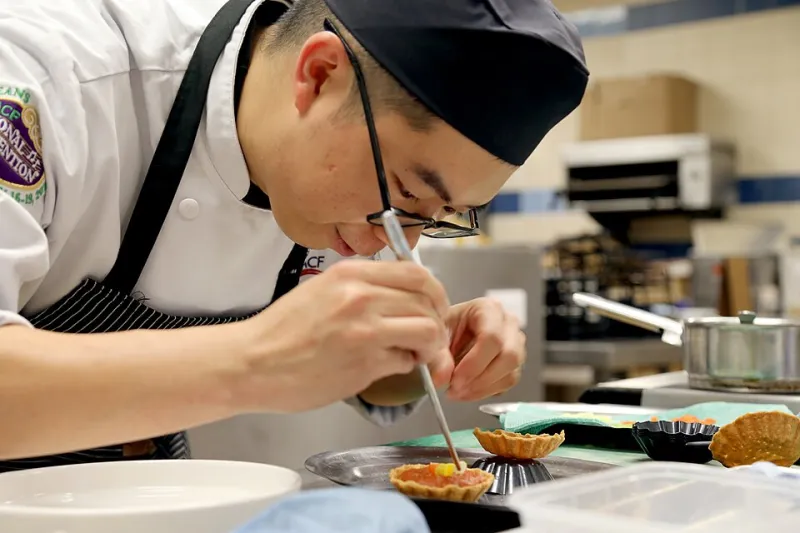
Photo: U.S. Navy NAVSUP by Russ Stewart, Public domain, via Wikimedia Commons
There is a particular sigh that some event planners emit when the dietary spreadsheet lands in their inbox. Forty covers, six vegan, two coeliac, one nut allergy, three halal, and a gluten intolerance that turns out, on closer inspection, to be a preference rather than a medical necessity. It reads like a problem to be solved.
We'd like to propose a different reading. In our kitchen, that spreadsheet is a brief — and often a better one than any generic 'something for everyone' instruction we've ever received.
Constraints Are the Oldest Creative Tool in the Book
Cooking without restrictions is, paradoxically, harder than cooking with them. Give a chef infinite options and you'll often get competent, forgettable food. Give them a boundary — no dairy, no gluten, no animal products — and they have to think properly about flavour, texture and structure.
Some of the most celebrated dishes in modern British restaurants were born from exactly this kind of pressure. The rise of vegetable-forward fine dining owes more to the demand for genuinely excellent vegan food than to any fashion for its own sake. Chefs who once treated the plant-based course as an afterthought found themselves having to build depth with roasted mushrooms, miso, charred leeks and good olive oil — and discovered techniques that improved every dish on the menu, not just the special one.
The same principle applies at event scale. Our smoke-roasted beetroot with whipped cashew and dill oil started life as a vegan canapé for a City law firm's summer reception. It is now one of the most requested items we make, ordered by guests who have never given veganism a moment's thought. A gluten-free almond and polenta cake, developed for a wedding where the bride was coeliac, out-sells our flour-based alternatives at every tasting we run it at.
Designing One Menu, Not Two
The old approach to dietary requirements was segregation: a main menu, then a sad parallel track of substitutes kept in the kitchen and delivered apologetically. Anyone who has been the guest receiving the 'special plate' knows exactly how that feels.
Our philosophy is simpler: design the menu so that the constraints are absorbed into the whole. If fourteen per cent of the room is gluten-free, build dishes that are naturally gluten-free rather than engineering a substitute. A braised lamb shoulder with white beans, gremolata and charred spring greens needs no adaptation for anyone. A halal-friendly meze spread of grilled aubergine, whipped tahini and warm flatbreads serves a mixed room without a single guest being singled out.
This approach has a commercial benefit too. Fewer separate preparations means fewer points of failure in a busy kitchen, less risk of cross-contact, and a service that runs more smoothly on the night. Inclusive design is efficient design.
Gathering the Information, Gracefully
For event planners, the awkward part is often upstream of the kitchen: how do you ask hundreds of guests about their dietary needs without making anyone feel like a burden?
A few practices we recommend to every client:
- Ask at the point of invitation, not the point of panic. Build a dietary field into the RSVP or registration process so it feels routine rather than exceptional.
- Distinguish allergy from aversion. A simple follow-up question — 'is this a medical requirement or a preference?' — lets the kitchen calibrate risk appropriately without anyone having to justify themselves at the table.
- Set a sensible deadline. Final numbers for dietary requirements should close five to seven working days before the event. Communicate this clearly and you'll avoid the day-before email chain.
- Never ask guests to bring their own food. If a caterer suggests this, find another caterer.
A Closing Thought for Planners
The vegan guest who prompted you to reconsider your menu is not the difficult one. They are the reason your canapés got more interesting, your service got tighter and your food got talked about on the way home. Treat every dietary requirement as a design constraint rather than a compliance exercise, and the whole table eats better.
That, we'd argue, is not a compromise. It's the job done properly.