Lunch as Interior Design: Feeding New Life Into a Tired Office
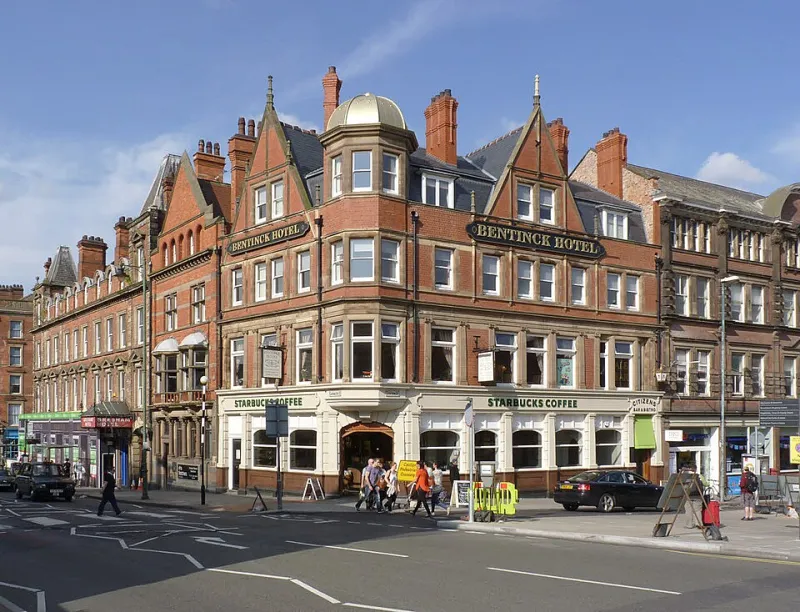
Photo: Alan Murray-Rust, CC BY-SA 2.0, via Wikimedia Commons
There comes a point in every office's life when the meeting room stops being a room and starts being an apology. The veneer has lifted from the table, the blinds have yellowed, and the chairs squeak in a way that punctuates every awkward pause. Management talks about a refurbishment; the budget says otherwise.
Here is the thing we have learned after years of catering in buildings of every vintage, from glass towers in the City of London to converted mills in Manchester: the perception of a space is governed less by its fittings than by what happens within it. And nothing changes what happens within a space quite like food and drink, properly done.
The Scent of a Serious Operation
Start with the most underrated tool in the caterer's kit: aroma. A room that smells of fresh coffee, warm bread or citrus has already told visitors something before a word is spoken. Compare that with the alternative — the faint tang of yesterday's microwave lunch and the institutional hum of a water cooler.
You do not need a full kitchen to achieve this. A barista station with a proper espresso machine, set up in the corner of a tired boardroom, transforms the room's entire character. The sound of the grinder, the steam wand's hiss, the smell of a fresh pull — these are sensory signals that say someone has thought about you today. Clients notice. Staff notice even more.
Placement Is Everything
Where food sits dictates where people go, and where people go dictates how a room feels. A standard office layout funnels everyone to the same chairs around the same table. Break the pattern with catering.
- Move the drinks to the far wall. Guests must cross the room to refill, which circulates bodies and conversations.
- Split refreshments across two stations. Two smaller points of service feel more generous than one crowded table, and they stop the dreaded queue.
- Use the window. A drinks trolley positioned near natural light flatters both the room and the people in it — and photographs infinitely better for the company's LinkedIn feed.
We have walked into meeting rooms that seemed beyond saving and, simply by repositioning service, created natural zones for conversation. The room did not change; the choreography did.
The Grazing Table as Centrepiece
A word on grazing displays, which have earned their place in the corporate toolkit when deployed with judgement. In a room lacking any focal point — no feature wall, no view, no art — a well-built grazing table becomes the focal point. Seasonal produce, good British cheeses, baked goods arranged with some architectural intent: suddenly the eye has somewhere to land.
The trick is restraint and quality. A display built from supermarket platters reads as desperation. One built from proper ingredients, styled to suit the room's palette, reads as intention. It is the catering equivalent of a statement lamp: one confident object doing the work of a redecoration.
Morale on a Plate
The client-facing benefits are obvious enough, but the internal case is arguably stronger. Staff who are offered a genuinely good lunch in a neglected meeting room experience a small, regular act of care. It costs a fraction of a refurbishment and delivers something no new carpet can: the feeling that the company invests in the everyday, not merely the impressive.
We cater for firms who have made this a rhythm — a monthly team lunch, quarterly client receptions, a standing Friday coffee cart. The rooms in those offices are used more, enjoyed more and complained about less. The décor has not moved an inch.
A Practical Starting Point
If your office space has seen better days, resist the instinct to hide it. Instead, programme it. Book a proper lunch service for your next client meeting rather than the usual sandwich platters. Position the food deliberately. Let the aroma do the welcoming. Ask your caterer about styling, station placement and seasonal menus — a good one will talk about your room as eagerly as your menu.
A refurbishment changes what a room looks like. Catering changes what a room feels like. On most budgets, only one of those is available this quarter — and in our experience, it is the feeling that people remember.